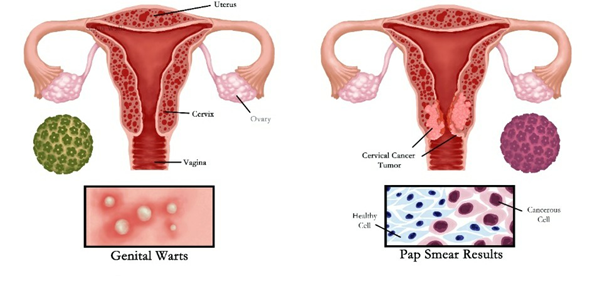
HPV is the name of a very common group of over 200 known viruses. It spreads through direct contact. Many HPV infections cause no symptoms and 90% resolve spontaneously within 2years. In some cases HPV infection persists and results in either warts or precancerous lesion. HPV infection is a global health challenge , contributing significantly to cancer morbidity and mortality. It is associated with approximately 4.8% of all human cancers.
HPV viruses are categorized based on their oncogenic potential into low risk and high risk types.
High risk types are associated with various cancers, including cervical, anal, oropharyngeal, penile cancers. Most common high risk types are 16 and 18.
Low risk types cause benign conditions like wars, respiratory papillomatosis. Most common low risk types are 6 and 11.
Indian scenario:
India accounts for approximately one sixth of the global burden of cervical cancer and one fifth of the globaldeaths from the disease.
Cervical cancer is the second most common cancer among women aged 15 to 44 years in the country.
HPV vaccination initiative in India:
HPV vaccination in India was initiated in Delhi in 2010, marking the beginning of a national effort to combat cervical cancer.
What is HPV vaccine?
HPV vaccines are composed of virus like particles that stimulate the immune system to produce antibodies against the virus. The vaccines are most effective when administered before exposure to the virus and this is why they are recommended for preteens and young adults before they become sexually active.
Currently there are several HPV vaccines approved for use in India, which protect against the most prevalent cancer causing strains of the virus. These vaccines have been extensively studied and have been shown to be safe and effective in preventing HPV infections and related cancers.
HPV vaccines available in India.
Bivalent (CERVARIX by GSK)for females aged 10-45 years.
Quadrivalent (Gardasil by MSD) for females aged 9-45 years.
Nanovalent (Gardasil 9 by MSD) for females and males aged 9-45 years.
Quadrivalent( Cervavac by SIIL) for females andmales aged 9-26 years.
Dosage:
Females: 9-45 years.
Below 14 years 2 doses six months apart.
15-45 years: 3 doses at 0,2,6 months.
Males: 9-45 years.
Below 14 years: 2 doses six months apart.
15-45years: 3 doses 0,2,6 months apart.
Special situations:
It is not recommended for use in pregnancy . If the patient conceives after the first dose , it is advisable to give further doses after pregnancy.
Lactating women can receive HPV vaccine.
HPV vaccine is a primary preventionintervention and does not eleiminate the need for screening.
Screening should be done as per guidelines with PAP smear or LBC, which can detect both early cancer and abnormal cells that may develop ito cancer.
Refernces:
CDC guidelines.
FOGSI-UNICEF guidebook for master trainers: Preventing cervical cancer through HPV vaccination in India.